Mission
Yellow Iron of the past century moved the Earth to feed, shelter, and connect the modern world. Thanks in large part to these machines, the world is at the precipice of technological revolutions that warrant new robots to continue accelerating human prosperity.
Amterra is building heavy equipment in the age of physical intelligence and energy abundance, for Earth and other rocky celestial bodies.
The Panama Canal is one of the greatest earthworks projects mankind has embarked on. Over two decades, a quarter billion cubic yards of earth were trenched. It claimed over 25,000 lives and cost France (who abandoned the project) and the United States a total of $20B. Such a feat could have only been accomplished thanks to the invention of the steam shovel only a few decades prior. Today, over three quarters of US trade goes through it, generating nearly $6B of revenue annually.
Humans have had a long history of earthworks. The first mining endeavor was digging up flint to make tools and weapons out of. The first construction project was possibly the shoving of boulders to build a mediocre dwelling. Homo sapiens began to move earth at an exponential rate as various forms of heavy equipment were invented and mass manufactured. Cumulatively, mankind has moved more than twice the rock that the Colorado River has carved out of the Grand Canyon. Mankind is a terraforming species.

A small fraction of the Grand Canyon
Earthworks is an often-underappreciated task, but it is often the first step to almost everything we depend on to prosper. A datacenter needs its site flattened and a foundation excavated before it can be built. There is a whole sequence of machines that rocks are passed between, starting at the blast face of a mine, to turn into the minerals we rely on. Farms need ditches dug to irrigate crops. Military forward operating bases need berms for protection and runways to operate aircraft.
It’s imperative that mankind continues to move as much dirt as is necessary to perpetuate an evermore prosperous civilization. However, western civilization in particular faces a number of hurdles. The population of workers willing to work in the uncomfortable, yet crucial, blue collar environments are dwindling. Demand for new construction megaprojects, primarily in the datacenter and energy space, is surging. There is also urgency in regaining control of our mineral supply chain. Meanwhile, China has begun to export their increasingly capable and affordable heavy equipment to the rest of the world.
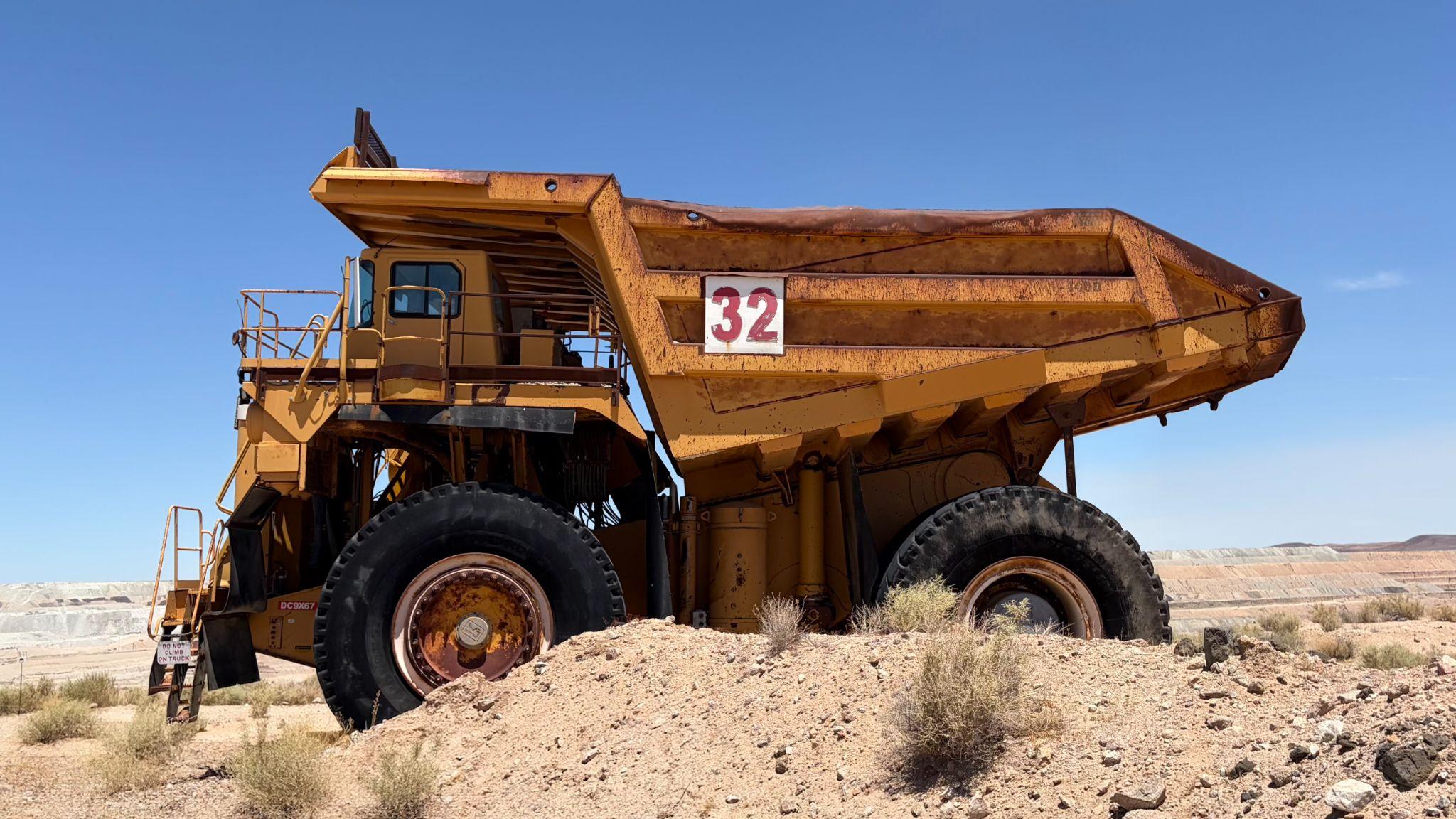
Very heavy equipment
Amterra is building the next generation of geomorphic agents. The heavy equipment that has incrementally evolved since the birth of the steam engine carries DNA of now-antiquated requirements. We believe that there is an opportunity to build new machines that can only exist because of new developments in physical intelligence and burgeoning energy abundance that is coming to fruition over the next few years. By removing the operator from the vehicle, design requirements that exist for the safety and ergonomics of the operator are no longer applicable. Many talented teams are already working on robotic autonomy, including specifically for heavy equipment. Other talented teams are working on rapidly deployable nuclear and solar. Superior battery chemistries are finally leaving the lab and entering small pilot plants. There are also a number of privately funded efforts that have begun to reshore the “electric stack” that China presently dominates. With all of these tailwinds, it would be foolish to not exploit the output of these endeavors.
As a point of inspiration, mankind is on the cusp of colonizing new planets. All of the work done needed to build prosperous civilizations here on Earth must be replicated. Even the United States, the Aerospace Republic, is totally unprepared for the scale necessary to establish a Jamestown on the Moon. While SpaceX solves transportation and communication for these New Worlds, more megacorporations need to be built whose north star is quite literally in the night sky. Amterra aims to be the company that digs dirt across the solar system.
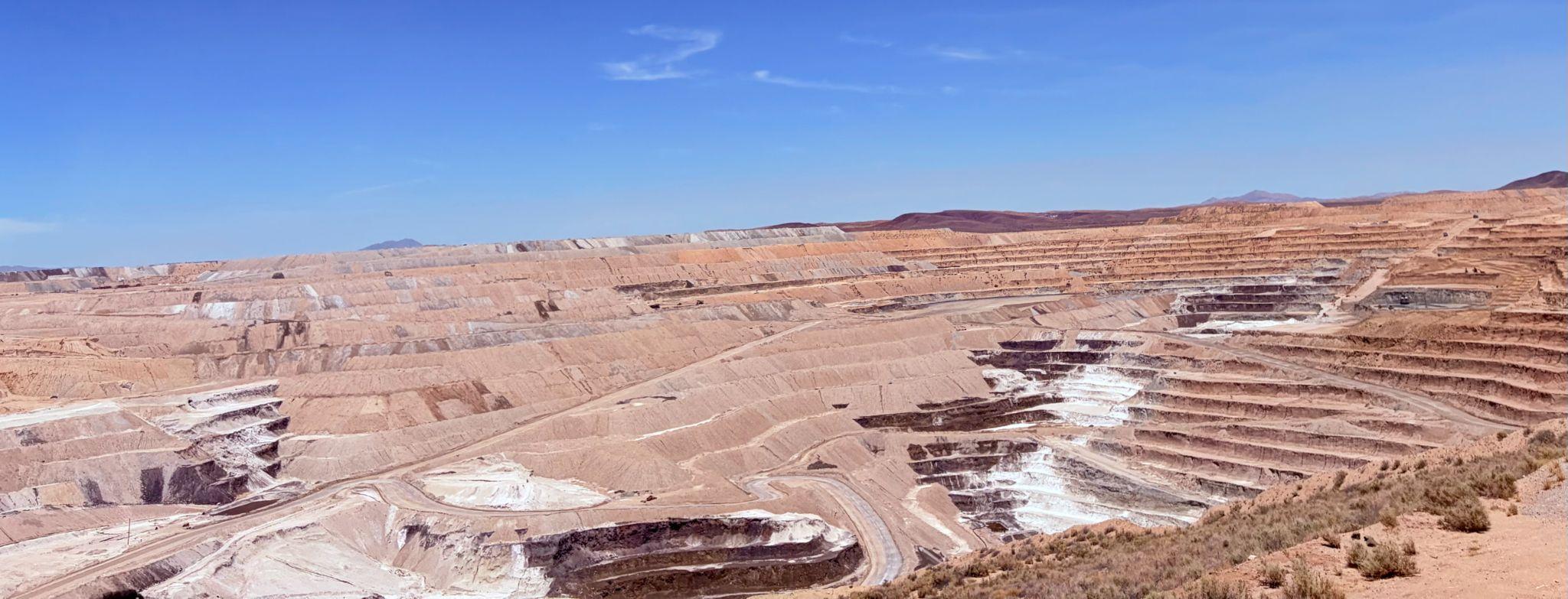
Gargantuan machines responsible for mining 30% of the world’s borate supply (you’ll have to squint)
The mission that Amterra is embarking upon is unbounded, and will take a decade of hard work before we can even contemplate taking on the more fantastical projects. While we dream of a green and blue Mars formed in part by our machines, we must begin our journey with a far more humble goal.
Over the next year, we will be prototyping a vehicle designed to multiply the productivity of small excavation operations. Other than the obvious* goal of providing a solution to a problem that customers want solved, the process of bringing this vehicle to fruition serves numerous objectives that makes this specific application appealing as a first endeavor. (We’ll share more details publicly as we mature the design and capabilities of this vehicle.)
We already have a very excited prospective customer that wants to put the prototype to the test in the mountains of Idaho, as soon as it’s ready to be deployed into the field. The demand for moving dirt faster, cheaper, and safer is there. All we have to do is execute.
Jonathan Kornich
Founder, CEO of American Terraforming

* While it is a truth lost to many in the tech ecosystem, value generation remains the most important objective for a successful company. Viral tweets, raising ludicrous amounts of capital, and invitations to bonfires are not what build generational companies.